

How Many Hours Is Part Time in Florida?
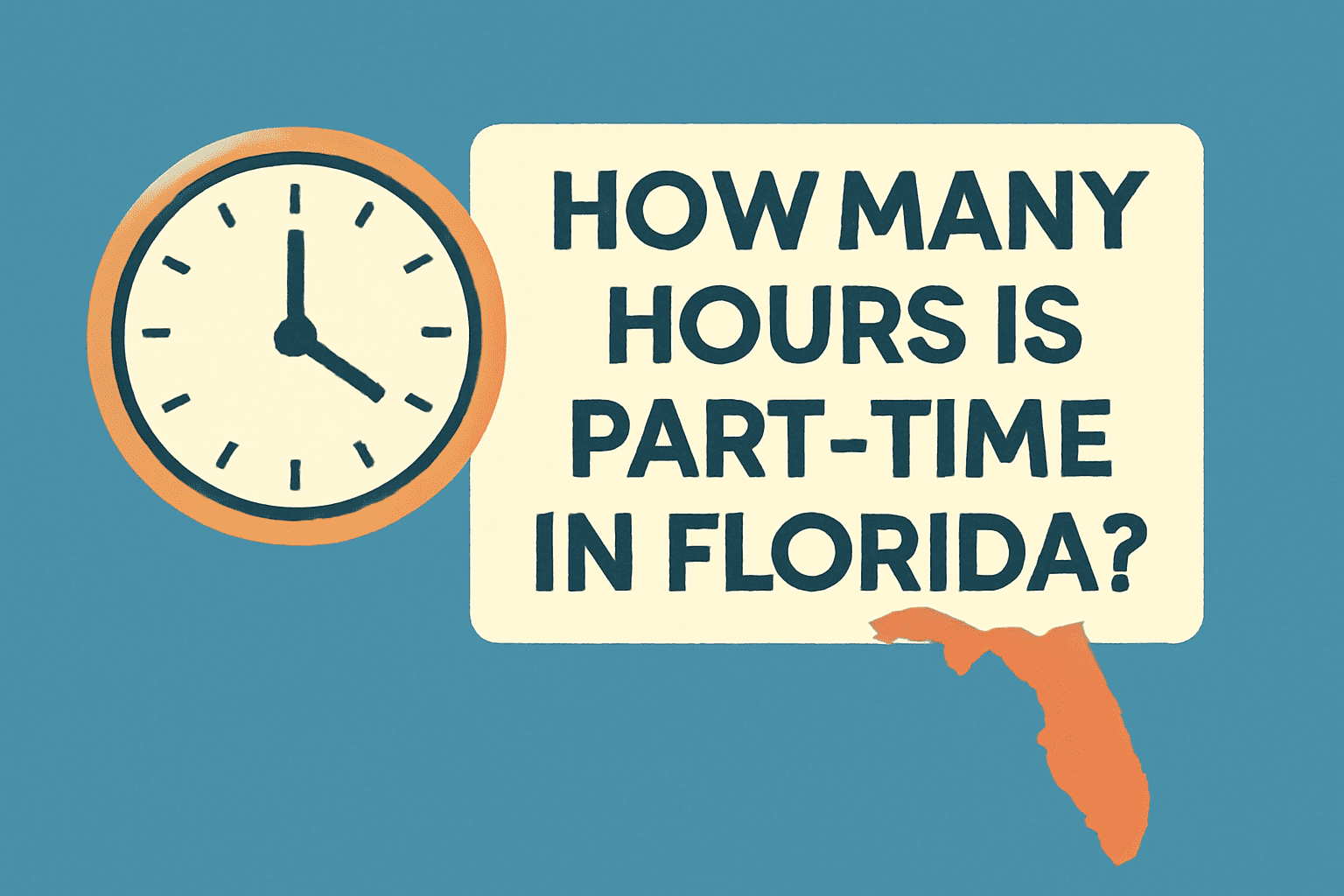
When you’re searching for a part-time job in Florida, one question that often comes up is: how many hours is part time in Florida? The truth is, there’s no official definition, and the answer depends on various factors like employer policies and industry practices. This article breaks down what you need to know about part-time work in Florida before accepting a part-time job.
Why Florida Has No Fixed “Part-Time” Definition
In Florida, there is no legal definition of what qualifies as part-time work. Fair Labor Standards Act (FLSA) provides rules on minimum wage and overtime pay, it doesn’t specify part-time versus full-time hours. This means that whether a job is considered part-time or full-time is ultimately up to the employer’s discretion.
Florida state law follows the same principle: there are no specific laws defining part-time hours. Employers have the flexibility to determine their own policies regarding what constitutes part-time work.
Common Benchmarks and Employer Practices in Florida
While there is no statutory definition, most Florida employers follow common industry standards when defining part-time work. Here are the typical benchmarks:
- 1–34 hours per week: This is a common definition used by many employers in Florida, meaning any worker who works fewer than 35 hours a week is often classified as part-time.
- 20–30 hours per week: Some employers, especially in industries like retail, hospitality, or food services, classify employees working between 20 and 30 hours a week as part-time.
- Under 40 hours per week: In certain cases, businesses may classify employees as part-time even if they work up to 39 hours per week, particularly in sectors with fluctuating hours.
What Part-Time Means: Pay, Benefits, Overtime
Even though part-time workers may not work full-time hours, their rights to wages and benefits depend on the specifics of their job and employer policies. Here’s a breakdown:
- Overtime Pay: For the non-exempt employee, overtime pay is required when they work more than 40 hours in a week. If you exceed the 40-hour mark, your employer is legally obligated to pay you overtime (time-and-a-half).
- Benefits: Part-time workers are not automatically entitled to benefits like health insurance, paid time off (PTO), or retirement contributions. Some employers can offer benefits to part-time employees, typically if they work around 30 hours or more per week.
Why “Part-Time Hours” Vary Widely and What to Check
The classification of part-time work can vary greatly depending on the employer, the job type, and industry needs. Here are a few key factors to keep in mind:
- Employer Discretion: Since there’s no clear statutory definition, employers have the freedom to define what they consider part-time work. This can lead to discrepancies in the hours that qualify as part-time, with some employers offering flexible hours while others might expect more hours from part-time employees, especially during busy seasons.
- Industry Differences: What qualifies as part-time may differ from industry to industry. For example, part-time work in a retail or food service setting might require employees to work variable hours depending on customer demand. On the other hand, office-based jobs might have more consistent part-time hours.
- Seasonal Work: Some businesses might classify part-time workers during peak seasons but expect full-time hours during busy periods. For example, a part-time job in a tourist area during the holidays could result in more than 30 hours per week due to demand.
Conclusion:
In Florida, part-time work does not have a set definition, and the number of hours considered “part-time” varies by employer. However, less than 35 hours per week is commonly accepted as the benchmark. It’s essential for both employees and employers to understand that part-time work is not a one-size-fits-all category.
If you’re considering a part-time job in Florida, make sure you ask about the number of hours you’ll be expected to work, as well as any benefits you may be entitled to. Also, keep in mind that while part-time work typically means fewer hours, your schedule may fluctuate based on the employer’s needs, and it’s important to clarify your work schedule upfront.
FAQ’s:
Q: Is there a legal definition of part-time hours in Florida?
A: No, Florida law does not define part-time hours. Employers have discretion in determining what qualifies as part-time for their business.
A: No, Florida law does not define part-time hours. Employers have discretion in determining what qualifies as part-time for their business.
Q: If a job says ‘part-time’, does that guarantee I’ll work under 30 or 35 hours/week?
A: Not necessarily. The “part-time” label can mean different things depending on the employer. It’s best to clarify the expected weekly hours before accepting the job.
A: Not necessarily. The “part-time” label can mean different things depending on the employer. It’s best to clarify the expected weekly hours before accepting the job.
Q: Do part-time workers in Florida get overtime if they exceed 40 hours in a week?
A: Yes, part-time employees are entitled to overtime pay if they work more than 40 hours in a week, in line with FLSA requirements for non-exempt workers.
A: Yes, part-time employees are entitled to overtime pay if they work more than 40 hours in a week, in line with FLSA requirements for non-exempt workers.
Q: Are part-time employees entitled to benefits like health insurance, leave, etc.?
A: Benefits for part-time workers depend on the employer’s policy. There is no legal obligation for employers to provide benefits to part-time employees, though some may offer benefits to workers.
A: Benefits for part-time workers depend on the employer’s policy. There is no legal obligation for employers to provide benefits to part-time employees, though some may offer benefits to workers.
Q: Can I end up working full-time hours even if the job is called part-time?
A: Yes, in some cases. Some employers may classify a job as part-time but require workers to clock more than 30 hours a week during peak times. Always confirm the expected hours before taking a job.
A: Yes, in some cases. Some employers may classify a job as part-time but require workers to clock more than 30 hours a week during peak times. Always confirm the expected hours before taking a job.